
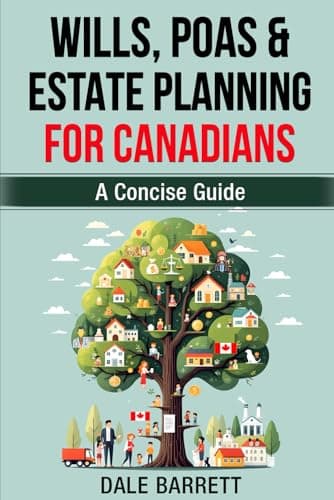
Book by Dale Barrett
Wills, POAs & Estate Planning for Canadians
What Every Canadian Should Know
A clear, approachable guide to the documents and decisions at the heart of estate planning: wills, powers of attorney for property and personal care, probate, beneficiary designations, and the tax consequences of death. It helps Canadians put a sound plan in place — and understand why province-specific rules matter.
Who it’s for: Every Canadian planning their estate.
- Wills
- Powers of attorney
- Probate
- Estate planning
From this book
Articles & guides drawn from this book
Free, plain-language guidance adapted from the book — part of the Barrett Tax Law Learning Centre.
Tax Planning at Death in Canada: Deemed Disposition, the PRE & the Spousal Rollover
Canada has no inheritance tax, but the deemed disposition on death taxes accrued capital gains as if you sold everything the moment before you died. The spousal rollover, the principal residence exemption, and post-mortem planning are how estates manage that bill.
Read →The Executor's Role, Probate & Probate Fees Across Canada
The executor turns a will into reality — collecting assets, paying debts and taxes, and distributing what is left. Probate validates the will and the executor's authority, and probate fees vary widely by province. Here is the role, the process, and the personal liability.
Read →Powers of Attorney in Canada: Property, Personal Care & Incapacity
A will takes effect when you die; a power of attorney takes effect while you are alive but unable to act. Here is how financial and personal-care POAs work, what an enduring POA adds, and the pitfalls that make a POA fail when it is needed most.
Read →Testamentary Trusts, Henson Trusts & Blended-Family Planning
A plain will divides property; a will with the right trusts protects it. Discretionary trusts, Henson trusts, life estates, and mutual wills let you provide for a second spouse, a disabled child, or young beneficiaries without unintended consequences.
Read →What Makes a Will Valid in Canada
A will only does its job if it is legally valid. Age, capacity, free choice, signing, and impartial witnesses are the building blocks — and the rules vary by province. Here is what each requirement means and where wills most often go wrong.
Read →
We're on it
Need urgent representation against the CRA?
Free consultation. Fixed-fee quotes on most matters. We begin within 24 hours of retainer.